Gas Line Repair & Inspection in Midtown, Manhattan
Natural gas powers the heating boilers, commercial kitchens, and domestic appliances of Midtown Manhattan. Gas piping systems require strict code adherence, calibrated pressure decay testing, certified appliance shutoff installations, and compliance with NYC Department of Buildings safety mandates.
Gas Piping Maintenance & Compliance in Midtown
In dense Midtown properties, including pre-war cooperatives near Bryant Park and commercial culinary suites throughout the Garment District, gas piping infrastructure operates under strict municipal supervision. When building managers require gas line repair Midtown Manhattan, experienced mechanical execution is critical.
Our team assists clients with routine gas piping inspection Midtown Manhattan requirements, examining meter headers, distribution manifolds, sediment dirt pockets, and boiler gas trains. When upgrading or renovating kitchen equipment, our gas line installation for stove Midtown Manhattan service ensures correct pipe sizing, code-mandated shutoff valves, and durable black steel threaded connections.
If a utility inspection has resulted in a gas service lockout or “red tag,” we perform systematic pressure isolation tests using calibrated digital manometers to locate leaks, rebuild compromised pipe sections, and coordinate the necessary DOB inspection sign-offs.
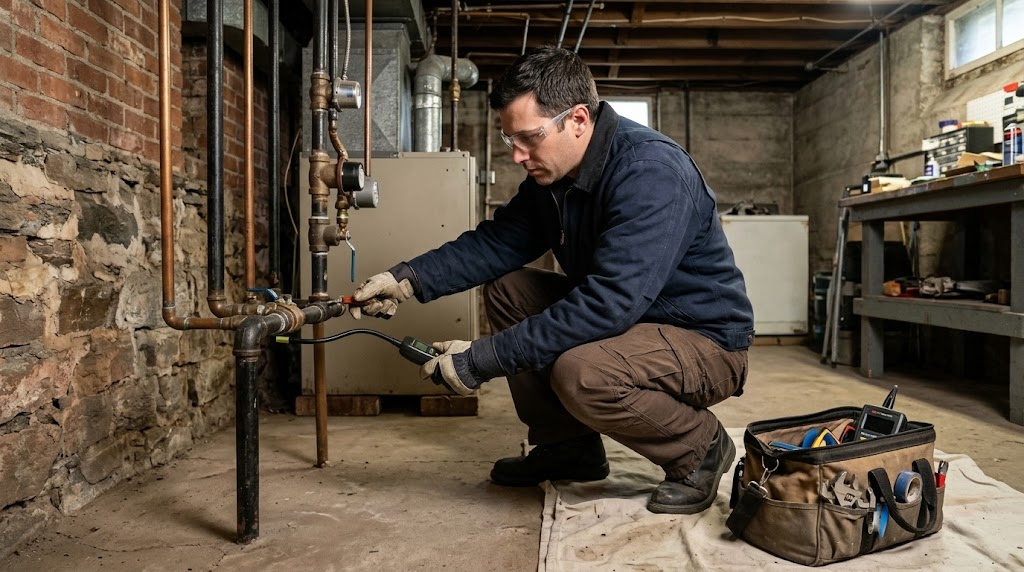
Gas piping inspection: testing black steel meter manifolds, calibrating gas regulators, and certifying mechanical shutoff valves.
Understanding NYC Local Law 152 Requirements
Mandatory periodic gas piping inspections for covered Manhattan buildings.
Which Buildings Fall Under Local Law 152?
Enacted to enhance building safety across New York City, Local Law 152 of 2016 mandates periodic inspections of all exposed gas piping systems in all buildings, with the exception of one- and two-family private homes classified as R-3 occupancy.
If your Midtown property is a multi-family apartment building, cooperative, condominium, or commercial structure located within Manhattan Community District 5, it must be inspected once every four years by or under the direct supervision of a Licensed Master Plumber (LMP).
Inspection Scope & Official GPS2 Filing
The inspection surveys all exposed gas lines from the point of utility entry up to public hallways, boiler rooms, and mechanical spaces (excluding individual residential apartment interiors).
Using calibrated electronic combustible gas sniffers, the inspector checks for gas leaks, illegal pipe extensions, unapproved flexible connectors, and severe corrosion. Official GPS2 inspection certificates are submitted to the NYC Department of Buildings (DOB), with statutory windows provided to correct any non-hazardous conditions found.
Related Heating & Mechanical Services
Coordinate gas line maintenance with heating boilers and water distribution in Midtown.
Boiler Repair
Service central steam and hydronic boilers, gas train safety valves, and electronic flame igniters.
Explore Boiler Services →Water Heater Repair
Troubleshoot gas water heater burner assemblies, thermocouples, and pilot gas safety shutoff controls.
Explore Water Heater Services →Midtown Service Areas
Review our specialized building coverage across Midtown South, Garment District, and surrounding neighborhoods.
View Neighborhood Coverage →Frequently Asked Questions About Gas Line Services
Direct technical answers regarding safety rules, Local Law 152, and testing standards.
What should I do immediately if I smell gas or hear hissing inside my building?
Evacuate the premises immediately. Do not operate light switches, electrical equipment, or mobile phones inside the building, and do not ignite flames. Once safely outside at a distance, call Con Edison at 1-800-75-CONED (1-800-752-6633) or dial 911 immediately. Never use routine plumbing telephone lines for emergency gas leaks.
What is NYC Local Law 152 and does it apply to Midtown properties?
NYC Local Law 152 mandates periodic safety inspections of exposed gas piping systems in all buildings except single- or two-family homes classified as R-3 occupancy. Multi-family apartment buildings and commercial properties in Manhattan Community District 5 must be inspected once every four years by a licensed master plumber.
What is involved in gas line installation for a commercial stove or residential range?
Installing a gas range requires sizing black iron supply piping, installing an accessible quarter-turn manual ball valve shutoff, connecting an approved flexible stainless steel connector, testing with calibrated manometer pressure gauges, and filing DOB work permits when altering supply manifolds.
How is gas service restored after a utility shutoff in Manhattan?
After Con Edison locks a gas meter due to a leak tag, an authorized licensed professional must isolate the piping, repair compromised joints, conduct an official high-pressure test witnessed by the utility or DOB inspector, and submit certification before the meter lock is removed.