Leak Detection in Midtown, Manhattan
Unexplained water damage, bubbling ceiling paint, or dripping sounds behind plaster walls threaten high-value pre-war apartments and commercial suites. We locate concealed pipe fractures, riser joint leaks, and fixture seepage accurately across Midtown Manhattan without demolishing entire living areas.
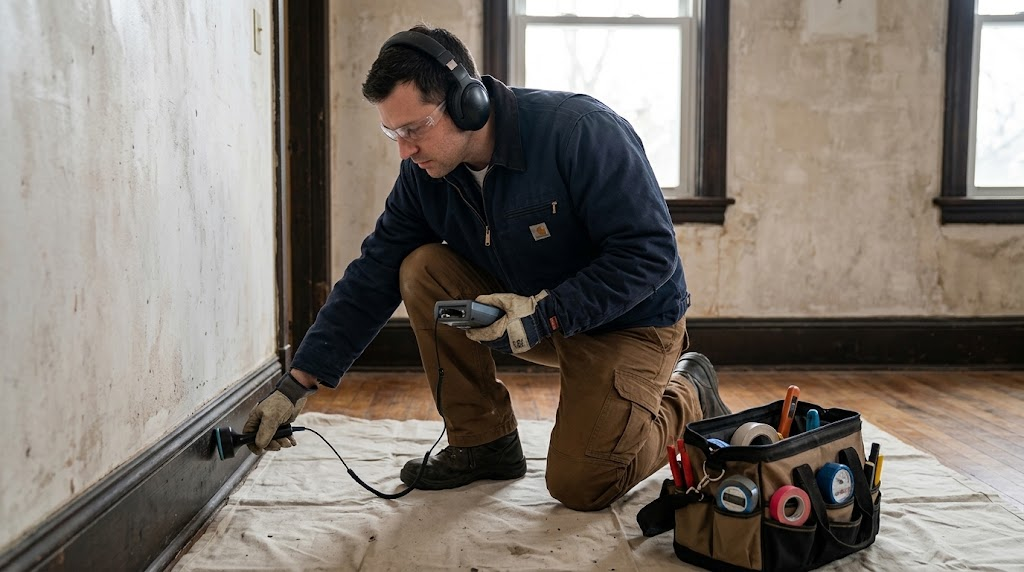
Precision leak detection: using electronic acoustic sensors and thermal imaging to isolate pressurized line failures inside multi-story apartment walls.
Warning Signs of a Concealed Water Leak
Early identification prevents structural drywall rot, electrical damage, and costly sub-floor reconstruction.
Ceiling Discoloration & Bubbling Paint
Brown water rings or peeling ceiling paint typically signal an active supply or waste leak originating from an upstairs bathroom, kitchen, or vertical plumbing chase.
Unexplained Water Sub-Meter Surges
When individual apartment or commercial tenant sub-meters spin continuously despite fixtures being turned off, a pressurized supply line is actively leaking behind finished walls.
Warped Hardwood & Damp Floor Tiles
Cupping parquet flooring or cold, damp spots on marble tiles indicate water migrating along concrete slab channels beneath finished subflooring.
Faint Hissing or Dripping Sounds
Constant low-frequency hissing sounds within drywall partitions often indicate a pressurized copper pinhole leak spraying inside a wall cavity.
Persistent Mold & Musty Odors
Damp drywall behind kitchen cabinetry or inside bedroom closets creates localized humidity, fostering hidden fungal growth before visible water penetrates the surface.
Intermittent Moisture Drops
Moisture that appears only during morning showers or dishwasher discharge points toward a failing drain trap arm, shower pan seal, or kitchen waste stack.
Water Migration in Multi-Unit Midtown Buildings
In dense residential buildings across Midtown, including pre-war co-ops near Bryant Park and post-war high-rises along 8th Avenue, finding water sources is rarely straightforward. Because Manhattan buildings feature concrete floor slabs, fireproof masonry, and shared vertical plumbing shafts, moisture travels along horizontal beams, electrical conduit sleeves, and steam pipe sleeves before dropping through a ceiling below.
When a resident requires ceiling leak repair Midtown Manhattan, the actual physical puncture may be situated fifteen feet horizontally away in an adjacent apartment or three floors above in a common mechanical chase. Similarly, a reported water leak from upstairs apartment Midtown Manhattan often stems from a worn shower pan membrane, an unsealed tub overflow gasket, or a corroded nipple connecting a radiator control valve rather than an obvious open valve.
Professional apartment leak detection Midtown Manhattan distinguishes between pressurized domestic water lines, unpressurized drainage lines, and heating pipe condensate, preventing unnecessary finger-pointing between neighbors and building management.
Why Older Midtown Buildings Face Complex Leaks
- Galvanized Iron Fatigue: Mid-century vertical risers accumulate internal rust tuberculation, creating hidden pinhole leaks inside enclosed wet columns.
- High Municipal Water Pressure: Manhattan main lines frequently operate at elevated pressures, stressing aging brass joints, shutoff valves, and soldered copper elbows.
- Vibrational Stress: Continuous subway rumblings and heavy commercial truck traffic generate subtle mechanical micro-vibrations that loosen threaded pipe unions over decades.
- Multi-Owner Governance: Pinpointing whether a leak sits on a shareholder's branch line or the building's common main riser determines who pays for repairs and restoration.
Step-by-Step Leak Detection Process
Systematic non-invasive acoustic and thermal tracking minimizes structural disruption.
Initial Site Survey & Pressure Drop Isolation
We inspect the reported moisture damage, review building riser schematics where available, and isolate individual fixture supply valves. If pressure drops when main apartment stops are closed, we confirm that the issue involves a pressurized domestic supply line rather than a gravity waste stack.
Acoustic Sensor Mapping & Thermal Imaging
Using calibrated thermal imaging cameras, we scan surface temperatures across walls, floors, and ceilings to trace thermal plumes caused by hot-water supply lines or evaporative cooling from cold-water leaks. Specialized ground microphones and acoustic pipe listening devices pick up the subtle ultrasonic frequency of water escaping under pressure through micro-fissures.
Precise Pinpointing & Verification
Once an area of interest is identified, electronic moisture meters map the saturation gradient to identify the epicenter of moisture. This eliminates guesswork, allowing for leak in wall detection Midtown Manhattan that confines any necessary exploratory drywall or tile opening to a small, surgical inspection port.
Actionable Repair Plan & Building Coordination
Following source identification, we provide clear documentation for the homeowner, superintendent, or managing agent. We explain the required repair—whether an isolated copper pipe section repair, valve replacement, or drain re-sealing—and coordinate safe water shutoffs with building maintenance staff.
Transparent Expectations on Non-Invasive Technology
Non-invasive electronic instruments significantly narrow down the origin of hidden water leak detection Midtown Manhattan, saving thousands of dollars in exploratory demolition. However, site conditions such as thick masonry firewalls, acoustic soundproofing insulation, or multiple overlapping pipe chases may still require small, selective access incisions to physically verify pipe condition and execute durable mechanical repairs.
Full-Spectrum Plumbing & Mechanical Services
Complementary repair, testing, and replacement solutions for Midtown properties.
Pipe Leak Repair
Permanent repair for corroded copper lines, pinholes, and split threaded joints behind kitchen and bathroom walls.
Explore Pipe Leak Repair →Repiping Services
Comprehensive replacement of failing galvanized water risers and deteriorating branch piping with high-grade copper.
Explore Repiping Services →Water Heater Repair
Diagnostic troubleshooting for electric, gas, and indirect tank units experiencing temperature loss or tank leaks.
Explore Water Heater Services →Boiler Repair
Reliable steam and hydronic boiler diagnostic service, pressure relief valve checks, and circulator pump repairs.
Explore Boiler Services →Gas Line Repair & Inspection
NYC Local Law 152 periodic gas piping surveys, pressure integrity tests, and certified gas appliance connections.
Explore Gas Line Services →Drain Cleaning
Electromechanical snaking and high-pressure jetting to clear stubborn kitchen grease, scale, and slow apartment lines.
Explore Drain Cleaning →Backflow Testing
Mandatory annual NYC DEP backflow prevention containment testing, device rebuilding, and municipal filing assistance.
Explore Backflow Testing →Toilet Repair
Fixing persistent running toilets, leaking tank bolts, worn flappers, and deteriorating wax ring seals.
Explore Toilet Services →Faucet Repair
Stopping chronic handle drips, cartridge leaks, and under-sink supply hose failures in kitchens and luxury baths.
Explore Faucet Services →Water Service Line Repair
Diagnosing suspected leaks and pressure drops in underground water supply lines connecting the property to the city main.
When a Suspected Leak Demands Immediate Response
Minor damp spots can rapidly escalate into structural ceiling collapses or electrical circuit shorts. Take decisive action if you observe any of the following emergency indicators:
- Water Flowing Near Electrical Panels: If moisture penetrates circuit breaker boxes, light switches, or recessed lighting cans, cut power at the main breaker if safe and evacuate the immediate room.
- Rapidly Expanding Ceiling Bulges: A sagging plaster or sheetrock ceiling holding accumulated water is at immediate risk of falling. Relocate furniture and place catch buckets beneath.
- Sudden Total Water Pressure Loss: An abrupt drop in pressure accompanied by the sound of rushing water indicates a completely severed pipe or blown fitting in a common riser.
Critical Property Safety Protocol
1. Locate Fixture Shutoff Valves: Turn the chrome angle-stop valves clockwise beneath the affected sink, toilet, or appliance.
2. Notify Building Maintenance: In multi-unit properties near Times Square or the Empire State Building, alert the building superintendent immediately so common branch valves can be checked.
3. Avoid Electrical Hazards: Never stand in pooled water to operate appliances or light switches.
Gas Leak Rule: If you smell natural gas or sulfur, leave the building immediately and call 911 or Con Edison from outdoors. Do not use standard plumbing telephone dispatch during gas emergencies.
Serving Midtown Manhattan & Surrounding Neighborhoods
NY Plumbing provides focused leak detection across the heart of Manhattan. From commercial lofts in the Garment District to luxury condominiums near Midtown South and residential brownstones bordering Murray Hill, we adapt our testing methods to the specific structural age and riser designs of each building.
Looking for local service details? We regularly assist clients needing leak detection near Midtown South as well as leak detection near Garment District. Learn more about our neighborhood-specific capabilities on our dedicated Service Areas overview.
Frequently Asked Questions About Midtown Leak Detection
Direct technical answers regarding apartment leaks, detection equipment, and building coordination.
How does water leak from an upstairs apartment into a ceiling below?
Water follows the path of least resistance through floor penetrations, riser pipe chases, electrical conduits, and masonry joints. A bathtub overflow, failing shower pan membrane, or leaking drain line in an upper unit often travels horizontally across concrete floor slabs before dripping through a ceiling light fixture or drywall joint in the apartment directly underneath.
Can a hidden water leak be found without tearing down walls?
Yes. Non-invasive electronic leak detection utilizes sensitive acoustic listening equipment, thermal imaging cameras, and calibrated radio-frequency moisture meters to trace temperature differentials and ultrasonic pipe vibrations behind plaster or sheetrock before making any selective, minimal exploratory openings.
What are common signs of hidden plumbing leaks in Manhattan apartments?
Key symptoms include peeling baseboard paint, bubbling wall plaster, persistent musty odors, warped parquet or hardwood flooring, unexplained damp spots on ceilings, hissing or dripping sounds behind walls, and sudden spikes in municipal sub-metering bills.
How is leak detection coordinated with co-op boards and building management?
In multi-family residential buildings and co-ops throughout Midtown, vertical risers and pipe stacks are typically building-wide common property, whereas fixture branches belong to the shareholder or unit owner. We communicate findings clearly with building superintendents and managing agents to pinpoint responsibility and facilitate necessary riser shutoffs.